How to Make Crispy and Juicy Japanese Fried Chicken (Karaage)
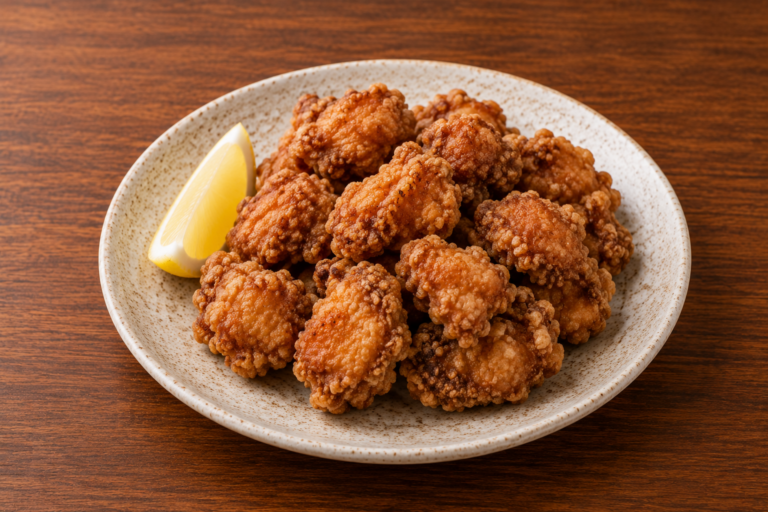
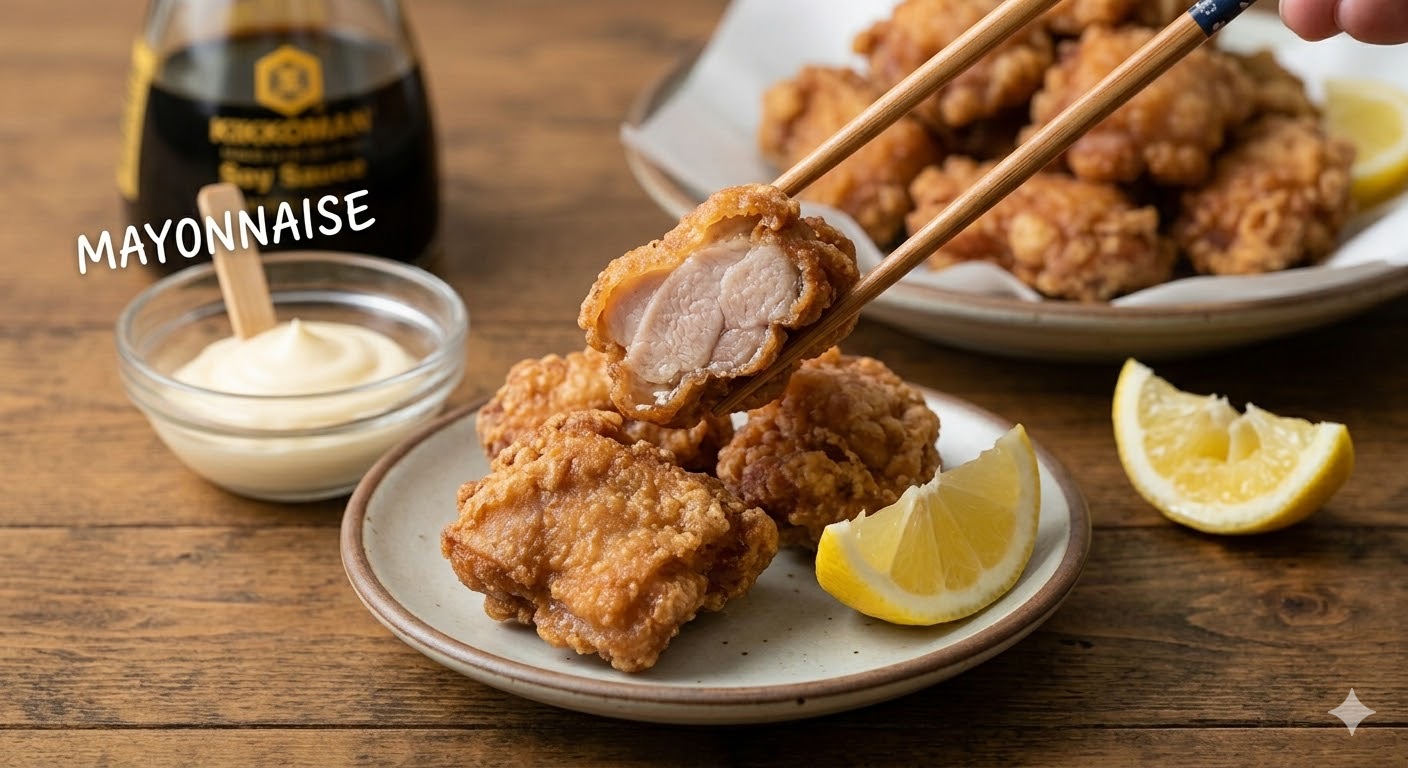
This basic Japanese Fried Chicken, known as Karaage, is the ultimate comfort food. It features a signature crunch on the outside while remaining incredibly tender and juicy on the inside. With simple pantry staples and a few professional techniques, you can recreate this authentic Japanese favorite right in your own kitchen.
What This Dish Is?
Karaage is a Japanese cooking technique where various foods—most commonly chicken—are deep-fried. Unlike Western fried chicken, the meat is marinated in a savory blend of ginger, garlic, and soy sauce, then coated in a light layer of starch and flour. This creates a thin, crisp shell that seals in all the juices.
Ingredients
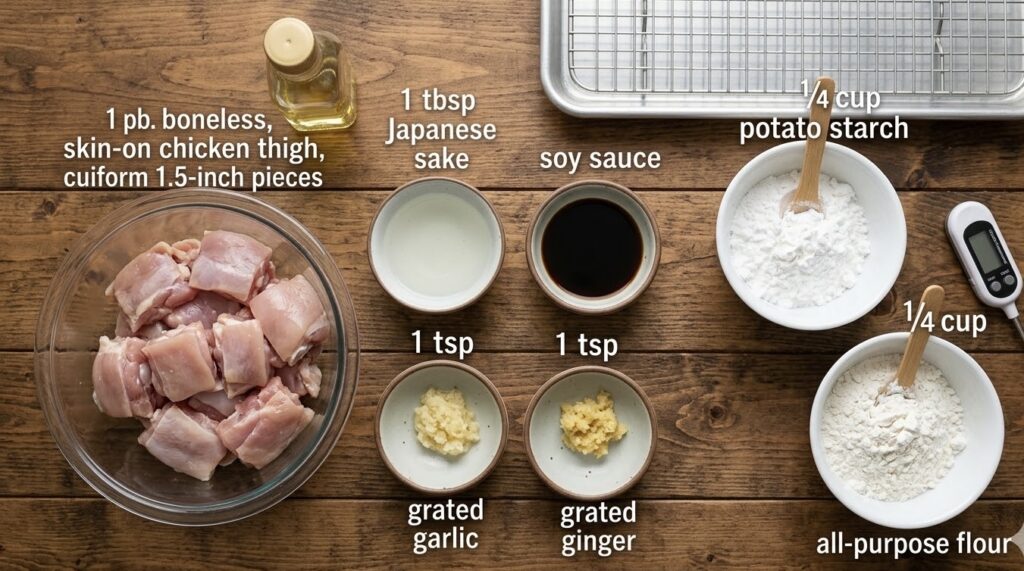
• 1 lb (approx. 450g) Chicken thigh (boneless, skin-on is best)
• 1 tbsp Sake
• 1 tbsp Soy sauce
• 1 tsp Grated garlic
• 1 tsp Grated ginger
• 1/4 cup Potato starch (Katakuriko)
• 1/4 cup All-purpose flour
• Extra potato starch for the “double coat”
• Neutral oil for frying (Vegetable, Canola, or Avocado oil)
U.S. Ingredient Notes
• Chicken Thigh: For the juiciest results, use boneless thighs with the skin on. You can find these at Asian grocery stores like Mitsuwa or H-Mart.
• Potato Starch: Often labeled as “Katakuriko.” It is the secret to a lighter, crispier crunch compared to cornstarch.
• Sake: If you don’t have Japanese cooking sake, a dry white wine or dry sherry works as a substitute.
Possible Substitutes in America
• Potato Starch: Cornstarch is a suitable substitute if potato starch is unavailable, though the texture will be slightly denser.
• Ginger & Garlic: Freshly grated is highly recommended, but the jarred or tubed versions from the Asian aisle are a convenient shortcut.
Tools You Need
• Large mixing bowl
• Plastic wrap
• Deep frying pan or Dutch oven
• Wire rack for draining
• Kitchen thermometer (optional)
How to Make It?
1 Prep the Chicken: Cut the chicken into bite-sized pieces. Pro tip: Larger pieces will be juicier, while smaller pieces will give you more of that crispy coating.
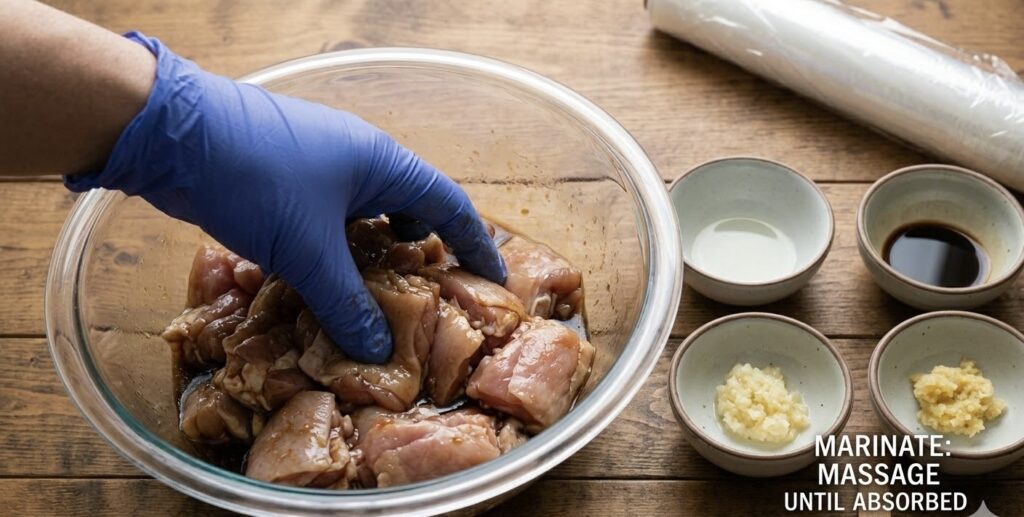
2 Marinate: In a bowl, combine the chicken with sake, soy sauce, garlic, and ginger. Massage the meat thoroughly until the liquid is fully absorbed into the chicken.
3 Rest: Cover with plastic wrap and let it marinate in the refrigerator for at least 30 minutes.
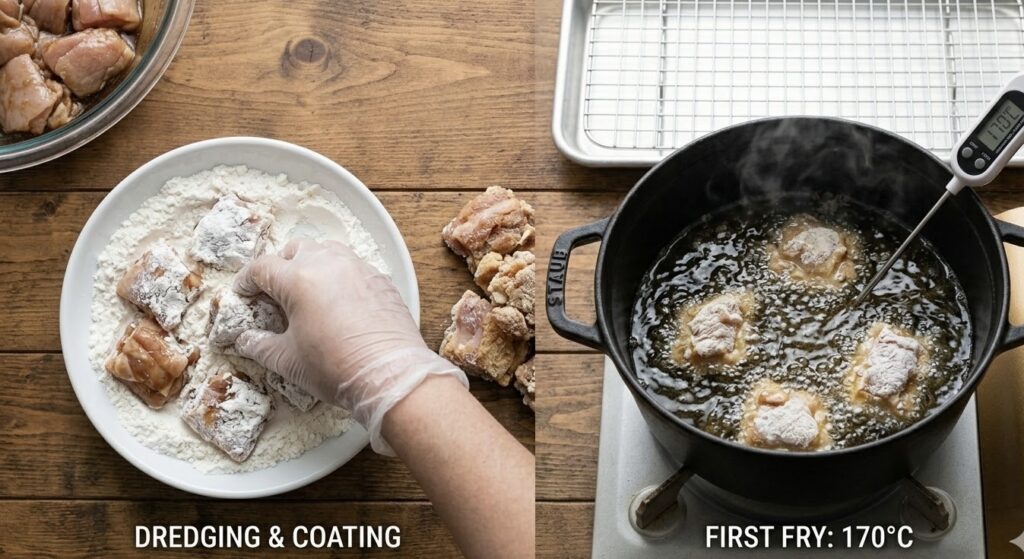
4 First Coat: Mix the flour and potato starch in a separate bowl. Toss the marinated chicken in the mixture until each piece is evenly coated.
5 The “Double Coat” Secret: Just before frying, dust each piece with a little extra potato starch. This extra step ensures a professional, super-crispy finish.
6 First Fry: Heat about 1 inch (2cm) of oil to 340°F (170°C). Carefully add the chicken. Do not touch the chicken for the first minute to prevent the coating from peeling off. Fry for about 3 minutes, turning occasionally.
7 The Rest Period: Remove the chicken and let it rest on a wire rack for 5 minutes. The residual heat will finish cooking the inside perfectly.
8 Second Fry: Increase the oil temperature to 355°F (180°C). Fry the chicken again for 2–3 minutes until it turns a beautiful golden brown and becomes extra crunchy.
9 Serve: Serve immediately while hot and crispy!
Beginner Tips
• Patience is Key: Resisting the urge to move the chicken in the first minute of frying is the secret to a perfect crust.
• Check the Temp: If you don’t have a thermometer, dip a wooden chopstick into the oil. If steady bubbles rise from the tip, it’s ready.
• Double Frying: Never skip the second fry! It’s the essential step that keeps the karaage crispy even after it cools down.
Storage & Shelf Life
Karaage is best enjoyed fresh out of the pan.
• Fridge: Store in an airtight container for up to 2 days. To restore the crunch, reheat in an air fryer or oven at 350°F.
• Freezer: You can freeze fried karaage for up to one month.
FAQ
Can i use chicken breast?
You can, but the result will be much leaner and potentially drier. Chicken thighs are traditionally used for their high fat content and flavor.
Why use both flour and starch?
Flour helps the coating adhere and provides a golden color, while potato starch adds that signature “shattering” crispness.
Is double frying necessary?
Yes. The first fry cooks the meat through, and the second fry at a higher temperature creates the crispy exterior without overcooking the inside.
Cultural Notes
Cultural Notes
In Japan, Karaage is a superstar of the “Bento” (lunch box). Because it retains its flavor and texture even when cold, it is a favorite for school lunches and picnics across the country.
What to buy on Amazon?
• Japanese Potato Starch (Katakuriko)
• Japanese Soy Sauce
• Wire Cooling Rack for Frying
Disclosure: As an Amazon Associate I earn from qualifying purchases.